Emission reductions
Can a biomass-pellet business generate carbon credits? Start here
What Indian pellet producers need to know about fuel switching, end users, measurement, eligibility, and project economics.
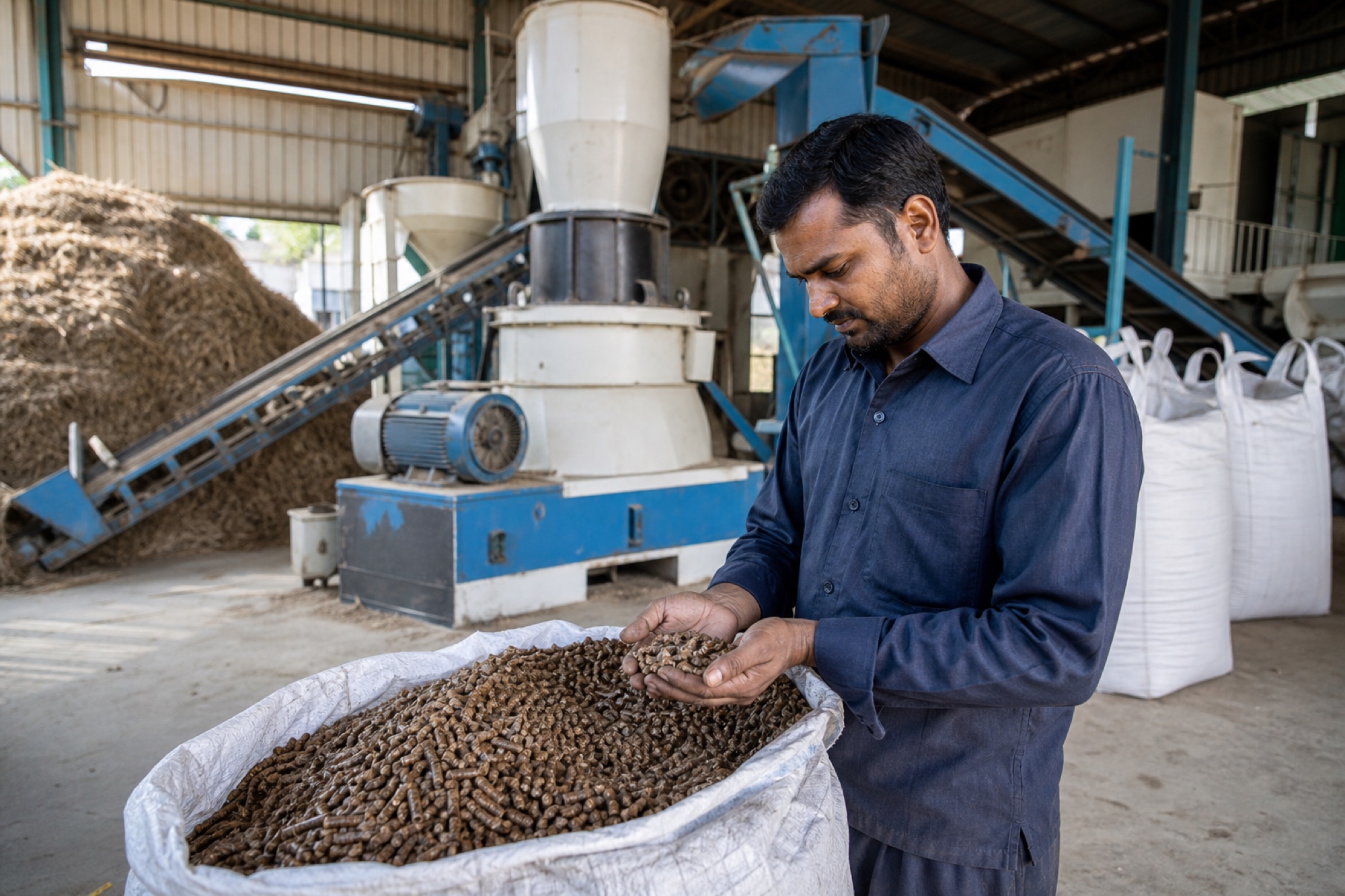
A pellet is a fuel, not automatically a credit
Biomass pellets may support an emission-reduction project when their documented use displaces a more carbon-intensive baseline under an applicable carbon-crediting methodology. Manufacturing or selling pellets by itself does not prove an emission reduction, establish additionality, or create a credit.
The potential project must be defined around the complete activity: producer, feedstock, end user, baseline fuel or non-renewable biomass, equipment, energy service, monitoring, leakage, contracts, and methodology.
Start with the end user
Ask who will consume the pellets, in which equipment, for what thermal or energy service, and what would have happened otherwise. Historical fuel bills, boiler logs, production records, efficiency, operating hours, and changes already planned by the user can materially affect the baseline and additionality case.
Some methodology pathways are activity- and scale-specific. The Gold Standard methodology for fuel switch from fossil fuels to biomass residues in boilers, for example, contains detailed applicability, baseline, project-emission, transport, and monitoring requirements. Methodology status and current programme rules must be checked at the time of project design.
Test six feasibility conditions
1. Applicable methodology
Identify a current methodology that fits the actual activity, geography, user type, baseline, scale, technology, and feedstock. An archived, replaced, or superficially similar methodology is not a development plan.
2. Credible baseline
Document the fuel and energy service that would continue without the project. Anticipated regulatory changes, existing conversion plans, subsidies, and common practice may affect the counterfactual.
3. Additionality
Establish why carbon finance changes the decision or enables the activity beyond business as usual. Preserve evidence before implementation decisions become irreversible.
4. Sustainable feedstock
Trace origin, residue status, competing uses, land and forest risks, moisture, processing energy, transport, storage losses, and contractual custody. Renewable does not mean impact-free.
5. Measurable displacement
Design metering and records for pellet quantity and quality, baseline fuel, useful energy or production, equipment efficiency, operating conditions, and downtime. Delivery receipts alone may not demonstrate actual displacement.
6. Leakage and project emissions
Account for processing, electricity, drying, transport, changes in biomass use elsewhere, and other required emission sources using the applicable methodology.
Structure contracts around data and claims
Carbon rights, monitoring access, audit access, data retention, methodology changes, under-delivery, verification failure, credit ownership, buyer claims, and termination need explicit treatment across the pellet producer, end user, and project partner.
The most useful first engagement is usually a defined fuel-switch feasibility study, not a promise to monetize every tonne of pellets.