Air explained
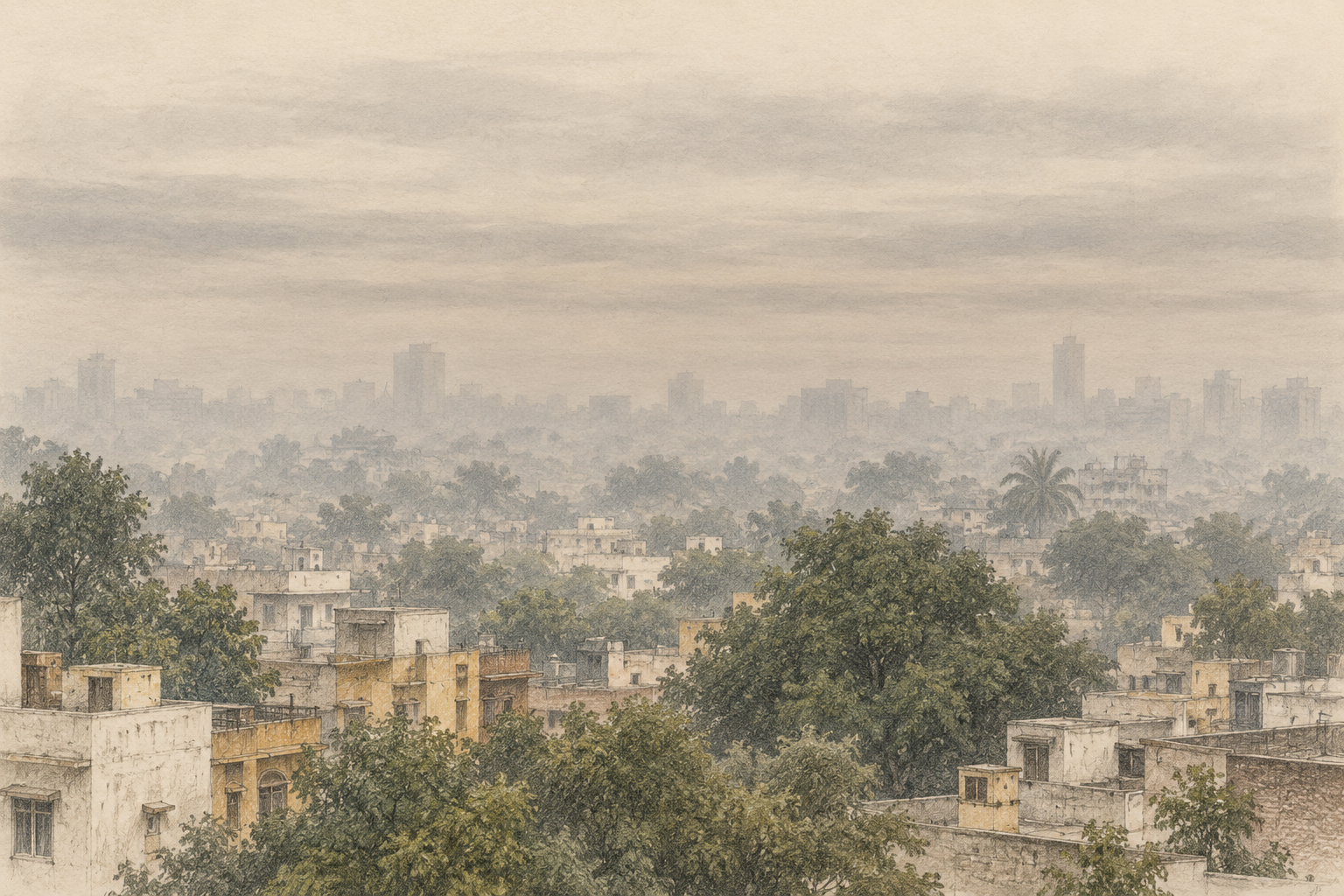
Why can the same city feel more polluted in the morning?
Wind and upward mixing help pollution spread. A simple explanation of why still mornings can feel worse, and why cutting emissions still matters.
Educational reading, reviewed 21 Oct 2026. Requirements depend on the applicable methodology and project; this article does not describe CarbonPod’s achieved results or a service offer.
Think of cooking in a kitchen with the windows shut. Smoke builds up. Open a window and some of it can drift away.
Something similar happens outdoors, on a much larger scale. Pollution enters the air from roads, industry, burning and other activities. How quickly it spreads depends partly on how the air moves.
Pollution needs somewhere to go
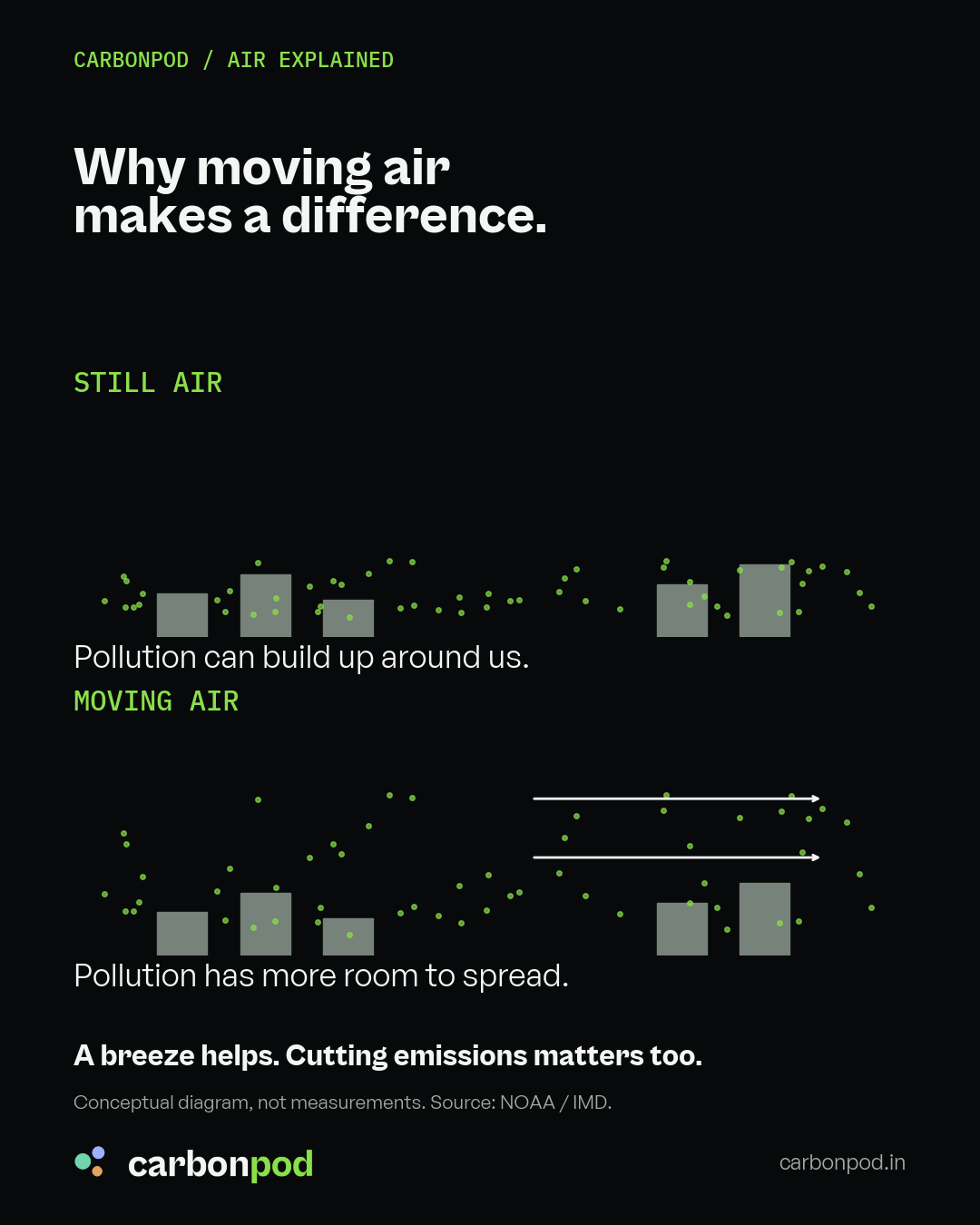
Wind can carry polluted air away. Air also mixes upward, giving pollution more space to spread.
When there is little wind and little upward mixing, pollution can build up near the ground. That is where we live, walk and breathe.
Why mornings can feel worse
On some clear, calm nights, the ground cools and the air near it becomes cooler too. A warmer layer above can make it harder for that lower air to rise and mix.
Pollution can then linger close to the ground. As the surface warms during the day, upward mixing may improve. Wind can help too.
This is one reason air quality can change between morning and afternoon. It is not a rule for every day. Pollution arriving from elsewhere, changing emissions and chemical reactions also affect what we breathe. NOAA explains how stable layers can limit mixing.
What does a forecast tell us?
Air-quality forecasters look at both wind and how much room the air has to mix upward. The official Delhi bulletin includes these alongside its air-quality outlook. Delhi air-quality and weather bulletin
For a reader, the useful question is simple: will pollution have room to spread, or is it likely to build up around us?
A weather forecast helps answer that question. It does not tell us which source caused the pollution.
Cleaner-looking air does not mean the problem is solved
Opening the kitchen window helps clear the smoke. It does not stop the pan from smoking.
Likewise, a breeze can lower pollution in one place while the sources continue releasing it. Some pollution can travel to other places.
We need to reduce what enters the air as well as understand where it goes.
For agricultural residue, that means making practical alternatives available before a farmer needs to clear the field. Collection must arrive on time, and suitable surplus residue needs a reliable destination.
That is part of the challenge CarbonPod is developing its model around. A change in the weather cannot replace that work.
Moving air helps pollution spread. Cutting emissions means there is less pollution to spread in the first place.