Biochar explained
What exactly is biochar?
A closer look at what biochar contains, why batches differ, and which properties matter for a growing mix.
Educational reading, reviewed 3 Nov 2026. Requirements depend on the applicable methodology and project; this article does not describe CarbonPod’s achieved results or a service offer.
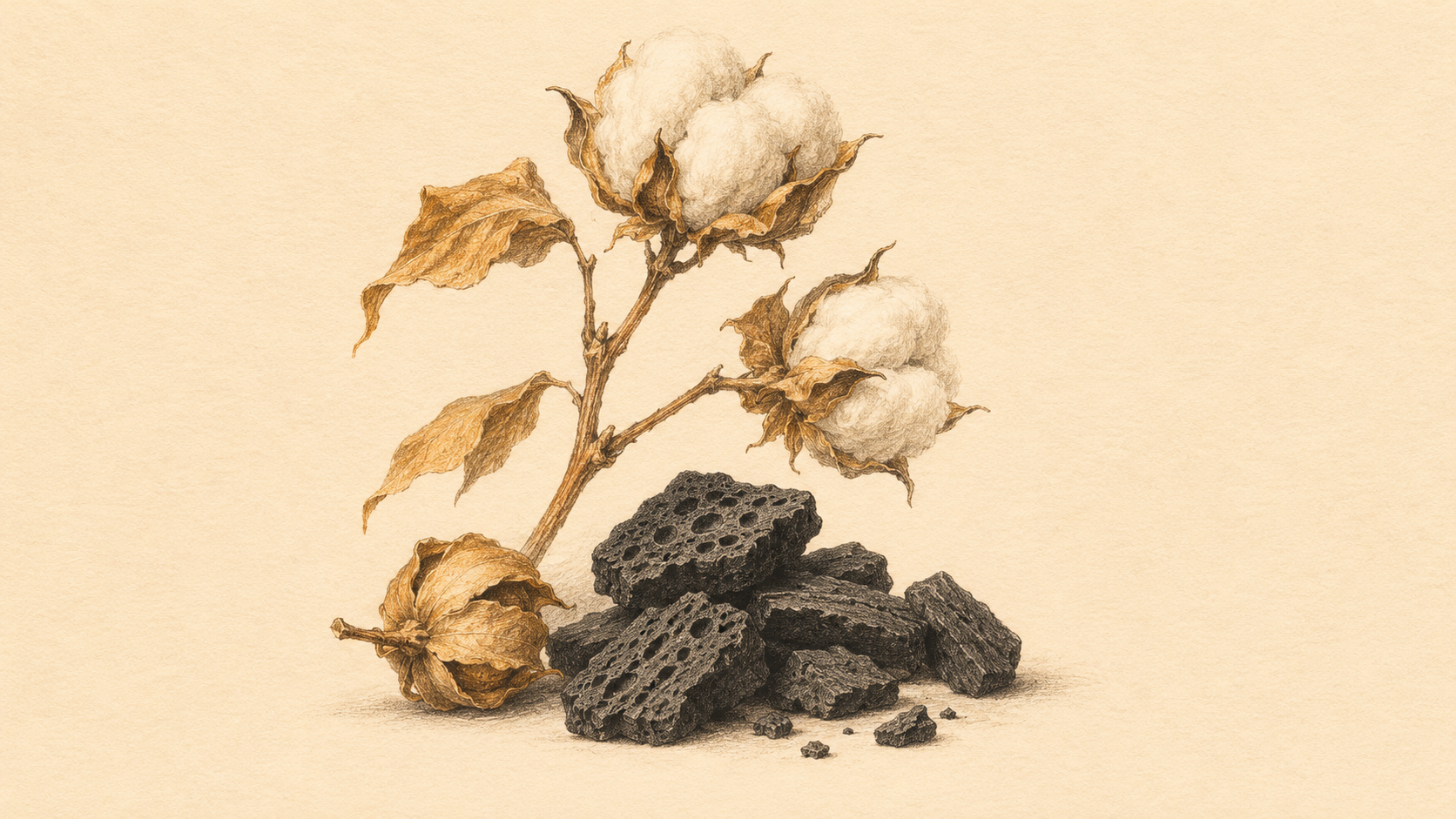
Biochar is a carbon-rich solid made by heating plant material with limited oxygen. It can be used as a soil amendment or as an ingredient in other materials, depending on its properties. In a handful of biochar, you might see pieces that still have the shape of the original plant. Look more closely and you can often see tiny pores left by the plant's structure.
What's in a piece of biochar?
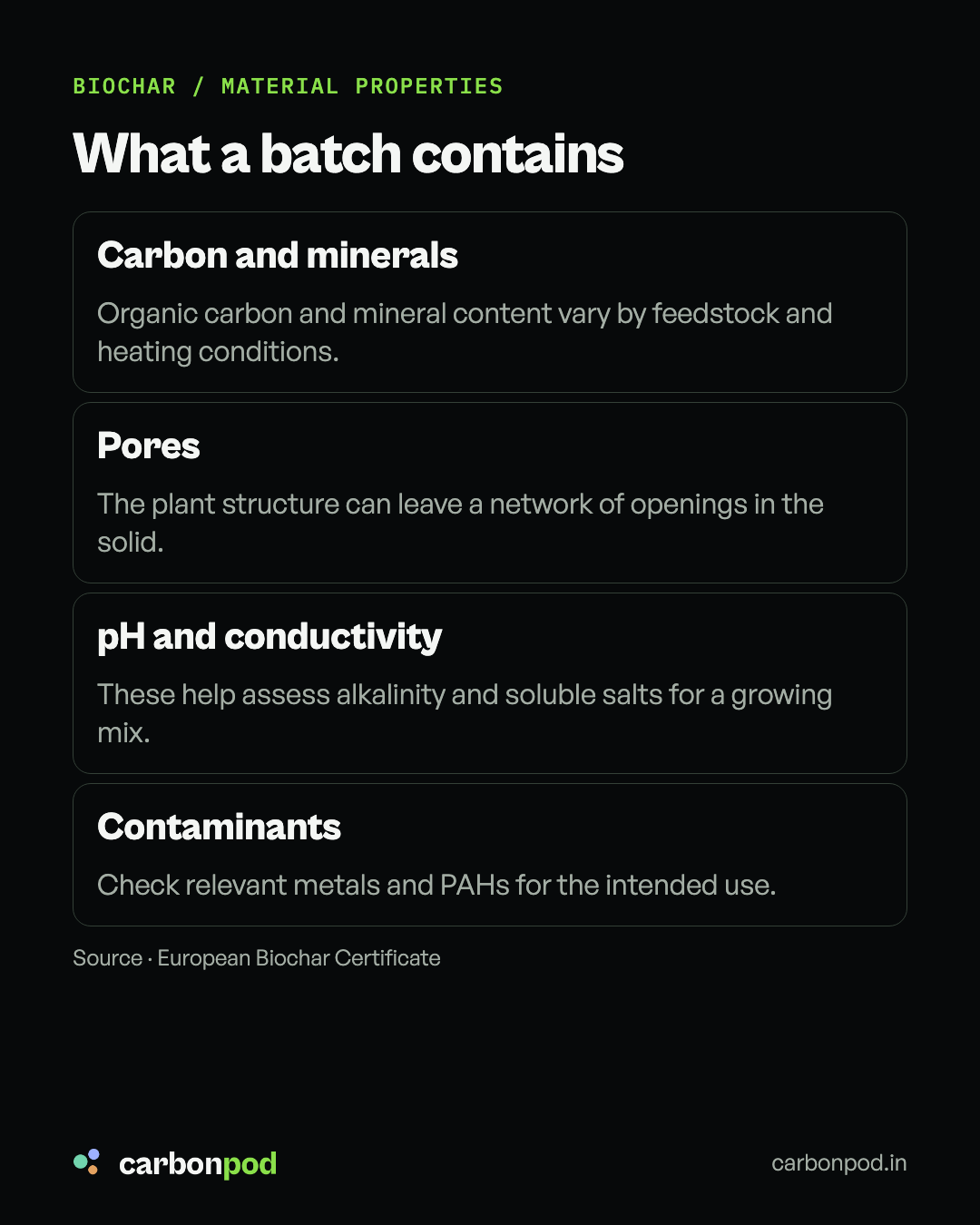
Biochar contains organic carbon and minerals. The carbon is part of the solid structure. The mineral portion, often reported as ash content, varies with the starting material. Biochar made from cotton stalks can have a different carbon content and mineral composition from biochar made from wood. Heating conditions also affect the resulting material. European Biochar Certificate guidelines
Cotton stalks are one example of a possible starting material. In September 2026, ICAR-CIRCOT discussed cotton-stalk biochar and potential agricultural applications. ICAR-CIRCOT
Why do its properties matter?
For a soil amendment, the pores and surfaces of a biochar can influence how it holds water. Its chemistry matters too. For example, pH helps you assess how an alkaline batch might fit a growing mix. Electrical conductivity helps you assess soluble salts. A lab can also screen for contaminants such as metals and polycyclic aromatic hydrocarbons, or PAHs. The relevant checks and limits depend on the application. Ithaka Institute
Two batches can look equally black in a bag and still have different properties. If you are considering one for a growing mix, ask for the lab report for that batch and check its pH, conductivity and relevant contaminant results against the requirements for the mix.