Residue explained
Useful residue or useful soil cover?
Before collecting straw, assess field needs, existing uses and suitable surplus. A Punjab rice-to-wheat example explains the decisions.
Educational reading, reviewed 7 Nov 2026. Requirements depend on the applicable methodology and project; this article does not describe CarbonPod’s achieved results or a service offer.
A processor sees raw material in the straw left after harvest. A farmer may also see protection for the soil and a way to manage the next crop. Both uses can have value. Before arranging collection, the question is how much material the field can responsibly spare.
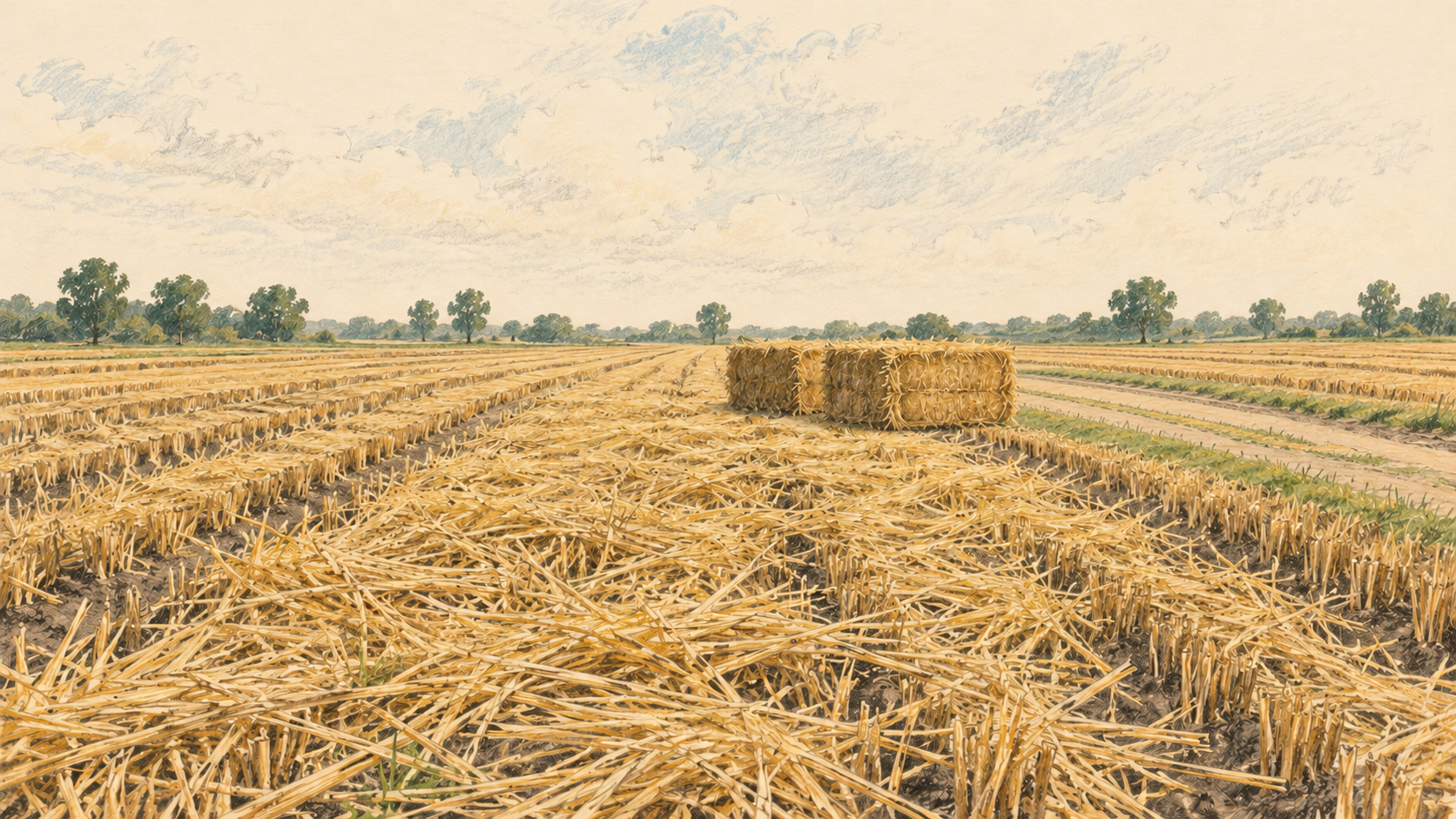
Picture a harvested rice field in Punjab. Wheat is due next. Loose straw lies between standing stubble. Collecting it is one possible operation. Keeping it as part of a suitable sowing system is another. The decision starts with the field, its condition and the equipment available.
What the cover does
A mulch layer shades the soil and reduces moisture loss through evaporation. Surface vegetation also cushions the impact of raindrops, while the amount and distribution of cover influence water infiltration. These are physical jobs that residue can perform before anyone turns it into a new product. FAO describes them in its guidance on soil organic cover. FAO
Retaining material needs a plan too. Straw scattered across a field and straw piled thickly in one corner provide different coverage. The next crop still needs to be established successfully.
A rice-to-wheat example
Punjab Agricultural University's Rabi 2025–26 guide describes sowing wheat in retained paddy residue using suitable machinery. With a Happy Seeder, uniform straw distribution matters. Soil moisture and residue load also affect how the operation should be managed. The guide includes additional precautions for fields with heavy soil and high straw loads. These are crop- and system-specific recommendations to discuss with a local extension adviser. PAU guide
This remains a practical subject in the current harvest period. PAU's October 13, 2026 report from a Sangrur awareness camp describes in-field residue management and machinery options for timely wheat sowing. It also emphasises recycling plant nutrients and improving soil organic matter. PAU, October 2026
Why a universal removal percentage falls short
FAO's conservation-agriculture principles include maintaining at least 30% organic soil cover. That figure describes the ground surface covered by residues or cover crops. It does not specify the fraction of harvested straw that a collector may remove. FAO principles
Cover and tonnes are different measurements. Material type, size and distribution affect the area covered. A pile at the edge of a field can weigh a lot while leaving most of the surface exposed. A procurement target therefore needs a field assessment, rather than a percentage copied from a general definition.
Three questions before a collection booking
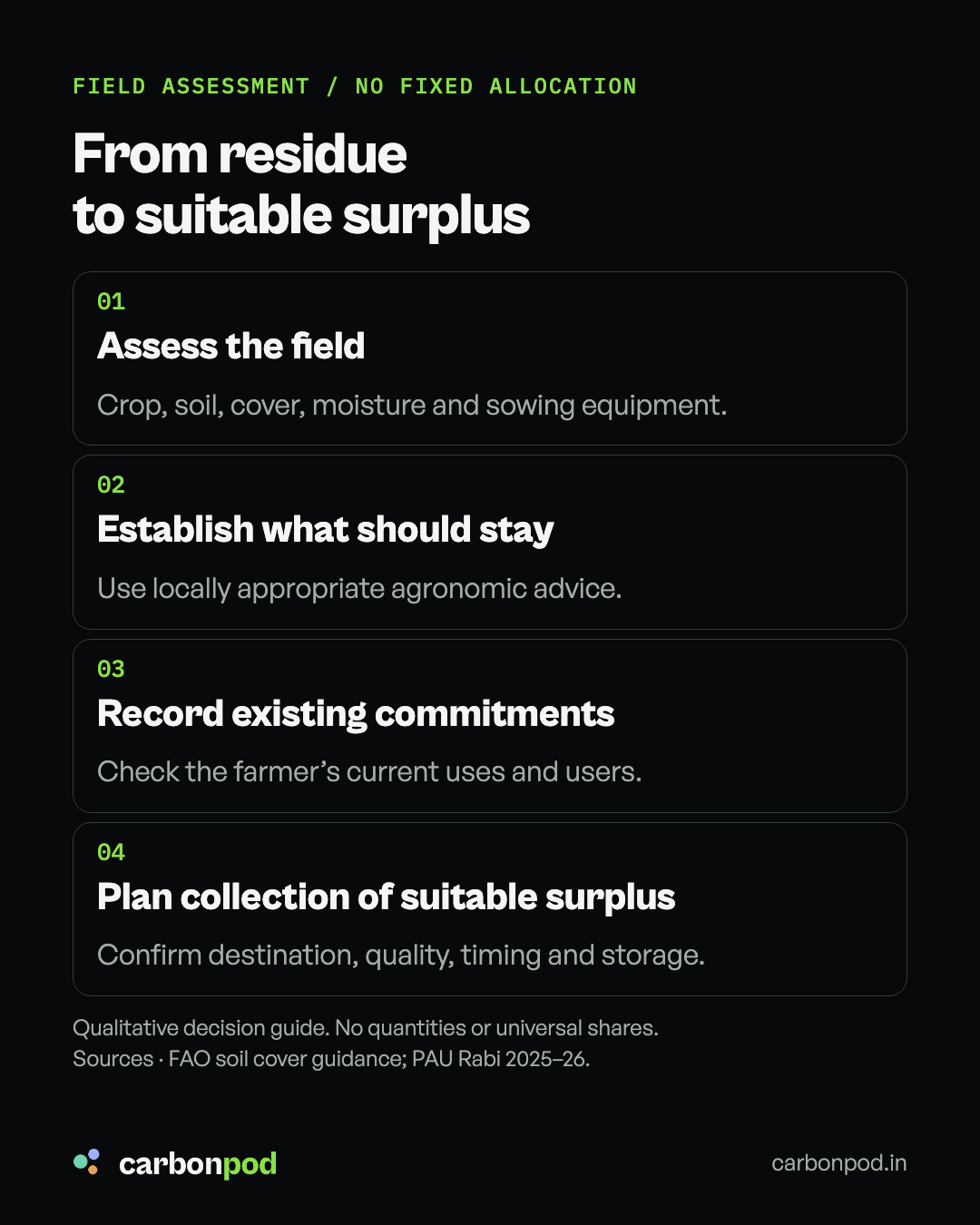
First, what should stay? Discuss soil cover and the next crop with the farmer and a locally qualified adviser.
Second, what is already committed? Record existing uses and who relies on the material before treating it as available.
Third, what can reach an accepting destination? For suitable surplus, agree the quality requirements, collection timing and responsibility for storage.
For CarbonPod's developing collection-and-biochar model, these questions belong at the start of planning. The amount lying in a field is the starting inventory. The amount available for a new use comes from understanding the field and its existing commitments.